Related News
Market statistics
- Total volume
- $3.1M
- 24h volume
- $2.7M
- Liquidity
- $1.0M
- Open interest
- $1.4M
- Comments
- 200
Available prediction outcomes (3)
Sorted by descending live probability. Click any outcome to trade it on PolyGram.
Market context
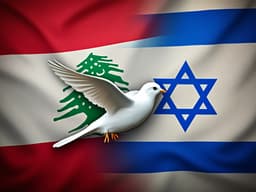
Israel and Hezbollah have maintained a ceasefire agreement since 16 April 2026, with two formal extensions announced on 23 April and 15 May respectively. The market assesses the probability of a third extension announcement by 30 June 2026. The ceasefire has held through two renewal cycles, each announced within days of the previous deadline, suggesting institutional commitment from both parties to maintain the arrangement rather than allow it to lapse.
Historical precedent from the 2006 UN Resolution 1701 ceasefire provides instructive contrast. That agreement lasted over a decade before deteriorating, though it lacked the formal renewal mechanism now in place. The current arrangement's two-week extension cycles differ markedly from traditional ceasefire structures, indicating either genuine fragility requiring frequent renegotiation or a deliberate confidence-building approach. The 100% crowd-implied probability reflects the established pattern: both previous extensions occurred with minimal public dispute, suggesting institutional inertia and mutual interest in avoiding escalation.
Key catalysts centre on Hezbollah's leadership stability and Israeli security assessments. Any significant cross-border incident, drone strike, or rocket fire would immediately threaten extension prospects. Traders should monitor statements from Israeli Defence Ministry officials and Hezbollah representatives in the fortnight preceding 30 June, particularly regarding compliance disputes or preconditions for renewal. Regional developments—including Iranian policy shifts or Palestinian ceasefire dynamics—could indirectly pressure the arrangement, though the bilateral nature of this agreement insulates it somewhat from broader Middle Eastern volatility. The settlement window's proximity to the likely announcement date means resolution hinges on whether either party signals non-renewal before the deadline.
Methodology
This page reviews Israel announces Lebanon ceasefire extension by 2026? across five venues. The live probability is the Polymarket mid-price, sourced directly from the on-chain Polygon order book; the comparison columns benchmark each venue on fee structure, KYC, settlement currency and payment rails. Every CTA routes to PolyGram, which mirrors the Polymarket order book at 0% fees.
Resolution & payout
Polymarket-based markets settle through the UMA Optimistic Oracle on Polygon. A proposer submits the outcome, a two-hour challenge window opens, and unchallenged proposals finalise the resolution. Payouts settle automatically in USDC the moment the result is final — no bookmaker, no delay.
Kalshi-based markets settle in USD via the CFTC-regulated clearinghouse. Betfair Exchange settles in GBP/EUR net of commission. Manifold is play-money and does not pay out real funds.
FAQ
- How does resolution work?
- Through the UMA Optimistic Oracle on Polygon: a proposer submits the outcome, a two-hour challenge window opens, and USDC payouts settle automatically once the result is final.
- What's the difference between YES and NO shares?
- A YES share pays $1.00 if the event happens, $0 otherwise. A NO share pays $1.00 if the event doesn't happen. The market price between 0¢ and 100¢ is the implied probability.
- What does Polymarket cost to trade?
- Polymarket itself charges 0% — the only cost is the Polygon network fee, typically under $0.01 per transaction. Off-chain venues like Kalshi or Betfair charge 2-7% commission.
- Do I need to KYC for this market?
- On Polymarket directly, no — it's wallet-based. Intermediary brokers like PolyGram trigger KYC only above $1,500 of lifetime trading volume; under that you trade pseudonymously with a single wallet address.
- How reliable are the quoted odds?
- The YES/NO percentages are the live mid-prices of the Polymarket order book. On deep markets they move every few seconds; on thinner ones you'll see short plateaus.
Trade Israel announces Lebanon ceasefire extension by 2026? on PolyGram
Live order book, 0% fees, USDC settlement in seconds.
Open live market →