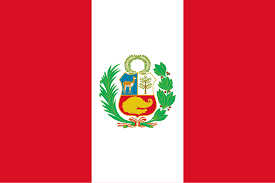
Platform comparison
| Platform | YES odds | NO odds | Fee | KYC | Settlement | |
|---|---|---|---|---|---|---|
Polymarket (via Best Prediction Markets UK) Pick polygram.ink (preferred broker) |
100% | 0% | 0% (USDC on-chain) | No-KYC up to $1,500 | USDC, auto via UMA oracle | View on Polymarket → |
Polymarket (direct) polymarket.com |
100% | 0% | 0% | Geo-blocked in US/UK/EU | USDC, on-chain | View on Polymarket → |
Kalshi kalshi.com |
— | — | Up to 7% per trade | US-only, KYC required | USD | View on Polymarket → |
Betfair Exchange betfair.com |
— | — | 2-5% commission | Full KYC from first trade | GBP / EUR | View on Polymarket → |
Manifold Markets manifold.markets |
— | — | Play-money (mana) | None — play-money | Mana (no cash-out) | View on Polymarket → |
Outcome probabilities
Current market-implied probability for each outcome, from the live order book.
| Outcome | Probability |
|---|---|
| Keiko Fujimori | 100% |
| Rafael López Aliaga | 0% |
| Mario Vizcarra | 0% |
| Carlos Álvarez | 0% |
| César Acuña | 0% |
| Alfonso López Chau | 0% |
| Vladimir Cerrón | 0% |
| José Luna | 0% |
| George Forsyth | 0% |
| Roberto Chiabra | 0% |
| Enrique Valderrama | 0% |
| José Williams | 0% |
| Fiorella Molinelli | 0% |
| Ricardo Belmont | 0% |
| Fernando Olivera | 0% |
| Carlos Espá | 0% |
| Rafael Belaúnde Llosa | 0% |
| Yonhy Lescano | 0% |
| Mesías Guevara | 0% |
| Marisol Pérez Tello | 0% |
| Jorge Nieto | 0% |
| Roberto Sánchez Palomino | 0% |
| Other | 0% |
| Wolfgang Grozo | 0% |
| Candidate B | 0% |
| Candidate C | 0% |
| Candidate D | 0% |
| Candidate E | 0% |
| Candidate F | 0% |
| Candidate G | 0% |
| Candidate H | 0% |
| Candidate I | 0% |
| Candidate J | 0% |
| Candidate K | 0% |
| Candidate L | 0% |
| Candidate M | 0% |
| Candidate N | 0% |
| Candidate O | 0% |
| Candidate P | 0% |
| Candidate Q | 0% |
| Candidate R | 0% |
| Candidate S | 0% |
| Candidate T | 0% |
| Candidate U | 0% |
| Candidate V | 0% |
| Candidate W | 0% |
| Candidate X | 0% |
| Candidate Y | 0% |
| Candidate Z | 0% |
Market context
General elections to elect Peru’s next president are scheduled for 12 April 2026, with a potential runoff if no candidate secures a majority. Current market data shows a 0% implied probability for any specific candidate to win, reflecting the extreme uncertainty before the first round. This mirrors Peru’s recent political volatility, where the nation has elected nine presidents in the past decade, including Keiko Fujimori’s razor-thin 2026 runoff victory over Roberto Sánchez, which was decided by just 50,000 votes and overseas support [2][3][4]. Such historical precedents underscore how fragile margins and shifting alliances can render pre-election odds unreliable.
Traders must monitor the first-round vote count on 12 April, candidate filing deadlines (23 December 2025), and voter registration cut-offs (14 October 2025), as these dependencies directly shape runoff probabilities [9]. Recent polling indicates a tight contest between Fujimori’s conservative Popular Force and Sánchez’s left-leaning Juntos por el Perú, with crime and instability dominating the agenda [5][6]. Any divergence between sportsbook lines, prediction-market probabilities, and analyst consensus will likely emerge as vote-counting begins, particularly if overseas votes or regional swings alter the outcome, as seen in the 2026 runoff where Fujimori’s lead grew steadily in the final days [8].
Methodology
This page is a comparison snapshot: one live quote, four reference venues with their key attributes, and a single execution path — every trade button routes to Best Prediction Markets UK, which mirrors the Polymarket order book directly.
Resolution & payout
Polymarket-based markets settle through the UMA Optimistic Oracle on Polygon. A proposer submits the outcome, a two-hour challenge window opens, and unchallenged proposals finalise the resolution. Payouts settle automatically in USDC the moment the result is final — no bookmaker, no delay.
Kalshi-based markets settle in USD via the CFTC-regulated clearinghouse. Betfair Exchange settles in GBP/EUR net of commission. Manifold is play-money and does not pay out real funds.
FAQ
- Is this market available outside the US?
- Polymarket itself is geo-blocked in the US/UK/EU. Always check the legal status of prediction markets in your jurisdiction before trading.
- What's the difference between YES and NO shares?
- A YES share pays $1.00 if the event happens, $0 otherwise. A NO share pays $1.00 if the event doesn't happen. The market price between 0¢ and 100¢ is the implied probability.
- What does Polymarket cost to trade?
- Polymarket itself charges 0% — the only cost is the Polygon network fee, typically under $0.01 per transaction. Off-chain venues like Kalshi or Betfair charge 2-7% commission.
- How fast are USDC deposits?
- Polygon credits deposits after 12 confirmations — usually under 30 seconds. Withdrawals follow the same path and land back in your wallet within minutes.
- How reliable are the quoted odds?
- The YES/NO percentages are the live mid-prices of the Polymarket order book. On deep markets they move every few seconds; on thinner ones you'll see short plateaus.
%22%2F%3E%3Cpath%20d%3D%22M%206%2066%20A%2026%2026%200%200%201%2058%2066%22%20fill%3D%22%23E6B98D%22%20opacity%3D%220.9%22%2F%3E%3Ccircle%20cx%3D%2232%22%20cy%3D%2226%22%20r%3D%2222%22%20fill%3D%22%23F5CBA7%22%2F%3E%3Cpath%20d%3D%22M%2010%2018%20Q%2016%204%2026%2010%20Q%2020%202%2032%206%20Q%2044%202%2038%2010%20Q%2048%204%2054%2018%22%20stroke%3D%22%2322d3ee%22%20stroke-width%3D%224%22%20fill%3D%22none%22%20stroke-linecap%3D%22round%22%2F%3E%3C%2Fsvg%3E) and
and%22%2F%3E%3Cpath%20d%3D%22M%206%2066%20A%2026%2026%200%200%201%2058%2066%22%20fill%3D%22%23E6B98D%22%20opacity%3D%220.9%22%2F%3E%3Ccircle%20cx%3D%2232%22%20cy%3D%2226%22%20r%3D%2222%22%20fill%3D%22%23F5CBA7%22%2F%3E%3Cpath%20d%3D%22M%2010%2026%20A%2022%2028%200%200%201%2054%2026%22%20fill%3D%22%2322d3ee%22%20opacity%3D%220.9%22%2F%3E%3C%2Fsvg%3E)
Trade Peru Presidential Election Winner on Best Prediction Markets UK
Live order book, 0% fees, USDC settlement in seconds.
Open live market →